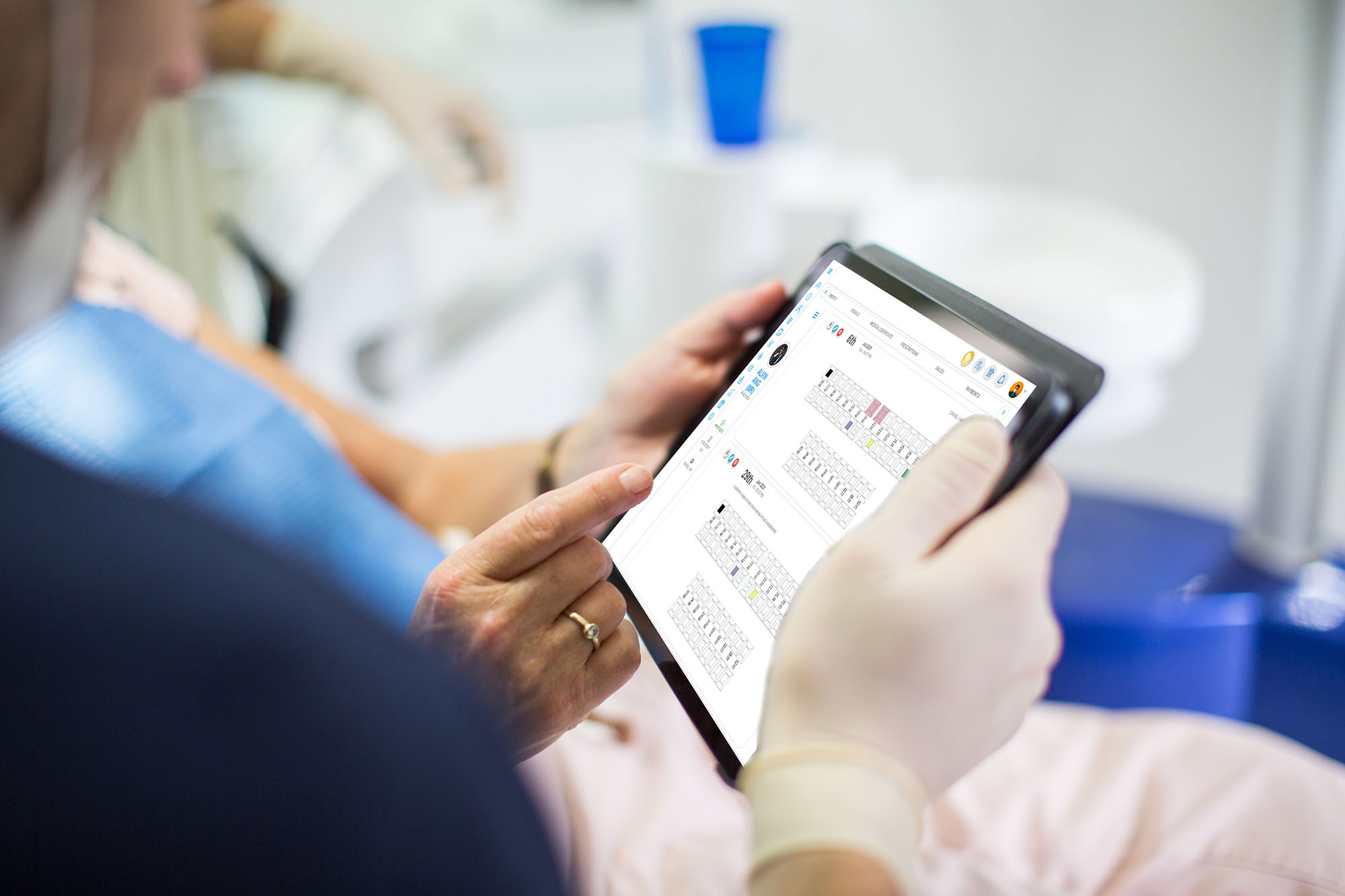
Electronic Medical Records (EMR) and Electronic Health Records (EHR) are both digital systems used to replace paper-based patient files. The main difference lies in how broadly the data is structured and used.
An EMR (Electronic Medical Record) is a digital patient record maintained within a single clinic or practice. It focuses on day-to-day clinical documentation and supports efficient record-keeping during consultations.
An EMR typically includes:
Within kumoDent™, EMR functions are designed to work seamlessly as part of a broader dental clinic management system. kumoDent™ structures its EMR around dental workflows, using electronic case notes with features such as annotations and photo collages to support clear and organised clinical documentation.
An EHR (Electronic Health Record) is designed as a more comprehensive record that supports continuity of care across different healthcare settings. It focuses on long-term health information that can be accessed and shared by authorised providers.
In practice, EMR and EHR are often used interchangeably, as many clinics primarily need complete, accurate, and secure patient records rather than system labels.
kumoDent™ delivers the practical benefits commonly associated with EHR systems, such as systematic storage, easy retrieval, and access across devices, while maintaining an EMR-style workflow that remains simple for daily clinic use.
Patient records are digitally stored, live-synced across branches, and supported by unlimited storage and built-in documentation tools. This allows clinics to move away from paper files while keeping clinical workflows familiar and efficient.
To support interoperability between private healthcare providers and public health infrastructures, Kumo™ incorporates structured clinical terminology through SNOMED CT and aligns with Ministry of Health requirements, while integrating with national health initiatives such as SATUSEHAT. This enables standardized medical records, ensuring consistent documentation and facilitating easier information sharing across healthcare providers.
A well-implemented EHR & EMR Malaysia setup supports better clinical documentation, smoother daily operations, and more reliable data handling. This is the foundation of a comprehensive Electronic Health Record (EHR), supporting better clinical decisions, streamlined operations, and a higher standard of patient care. kumoDent™ is designed to deliver these benefits with a system that ensures consistency, efficiency, and security.
Fragmented systems can limit information sharing between private clinics and public healthcare infrastructures, leading to duplicated records and inconsistent data. kumoDent™ supports interoperability by incorporating structured clinical terminology through SNOMED CT and aligning with Ministry of Health requirements. This enables the use of standardised medical records, making patient information more consistent, easier to reference, and more seamless to share across different healthcare providers.
Paper-based notes introduce common risks such as missing details, unclear handwriting, and inconsistent formatting. EHR & EMR’s digital case notes help standardise how patient information is recorded and kept within each patient profile. Real-time auto-save helps prevent lost notes, while passcode-protected amendments add accountability by tracking updates and maintaining a clear audit trail.
Instant access to patient history and clinical notes reduces time spent searching physical files. Clear documentation and digital records support smoother consultations and better chairside communication, especially when combined with tools such as digital periodontal charting that keep clinical tracking organised within the patient record.
kumoDent™ EHR & EMR centralised digital records reduce risks tied to physical files and manual handling. kumoDent™ runs on a secure cloud environment and is ISO/IEC 27001:2022 certified, aligning with recognised information security standards. Controlled access and reliable storage support structured electronic records used by clinics in Malaysia. Compliance workflows also stay organised when clinical records connect with clinic e-Invoicing management.
Physical storage, printing, and file handling add ongoing cost and clutter. Digital forms help reduce paper dependency and keep consent documentation organised within each patient profile. Unlimited storage also reduces pressure to archive or remove older records, supporting long-term retention without expanding physical storage space.





 English
 B. Malaysia
 Chinese
 B. Indonesia
 Thai
Thai