
A dental clinic runs on small daily decisions: who to roster, what to charge, which patients to follow up with, which consumables to reorder. Without structured reports, many of those calls come down to gut feel and half-remembered numbers. The clinic still runs, but no one can say for sure why Tuesday was busy and Wednesday went quiet.
The fix isn’t another report template in Excel. It’s a dental clinic system with reporting built into the platform, turning daily activity into clear, filterable insights. With that kind of visibility, owners can shift from reacting to yesterday to planning for next week.
Manual systems and disconnected tools leave blind spots where clear numbers should be.
When appointments live in one notebook, payments in another, and inventory in a third spreadsheet, pulling anything useful together takes hours. By the time the numbers are consolidated, the window to act on them has usually closed.
Without customer and appointment reports, it’s hard to see where new patients come from, who cancels, who rebooks, and when demand peaks. Retention efforts become guesswork and marketing spend follows hope, not evidence.
Even when numbers are eventually pulled together, the lag between what’s happening and what’s reported turns every decision into a rearview-mirror call. By the time owners see last week’s pattern, next week is already half-booked.
Staff contributions blur together when no one is tracking them. Without dedicated tracking, owners can't easily see who treats how many patients, which team members drive revenue, or where accountability gaps sit. Performance conversations can drift into opinion, and evaluations become harder to justify to staff.
Earned against unearned revenue, top-performing treatments, and service-by-service breakdowns all stay hidden. Pricing and service-mix decisions then happen without the data to support them.
Without payment reports, collections and wallet balances are unclear, so reconciliation eats admin hours. Without inventory reports, consumables go overstocked or run out at the wrong moment, and margin leaks quietly through the cracks.
Read More: Patient Retention Strategies: Building Lasting Relationships with Your Patients
A dental clinic system takes a different approach. Instead of adding another template to the pile, it builds reporting into the system itself. Owners get the full operational picture in real time, with filters that drill down to the branch, date, or employee.

All clinic activity, from patients and staff to revenue and operations, rolls up into a single view. Date and outlet filters let HQ teams drill into each branch to see which outlet is pulling the numbers and which one needs support.
Reports reveal patient sources, booking patterns, cancellations, attendance rates, and visit frequency. Owners can see which marketing channels are delivering, tighten scheduling around real demand, and build retention campaigns around the patients most likely to come back.
See patients treated, services completed, and revenue contribution per team member. Performance conversations become evidence-based, not opinion-driven, and workforce decisions follow the numbers, not the loudest voice in the room.
Revenue breakdowns by service, package, and treatment type highlight top performers and the slow movers. Pricing adjustments and service-mix decisions are then grounded in what patients buy, not what the marketing plan assumed they would buy.
Payment reports cover collections, cash wallet usage, and balances, supporting accurate reconciliation and tighter cash flow control. Inventory reports track consumable usage, material costs, and stock levels, preventing both wastage and stockouts.
Read More: Inventory Management in a Clinic Management System
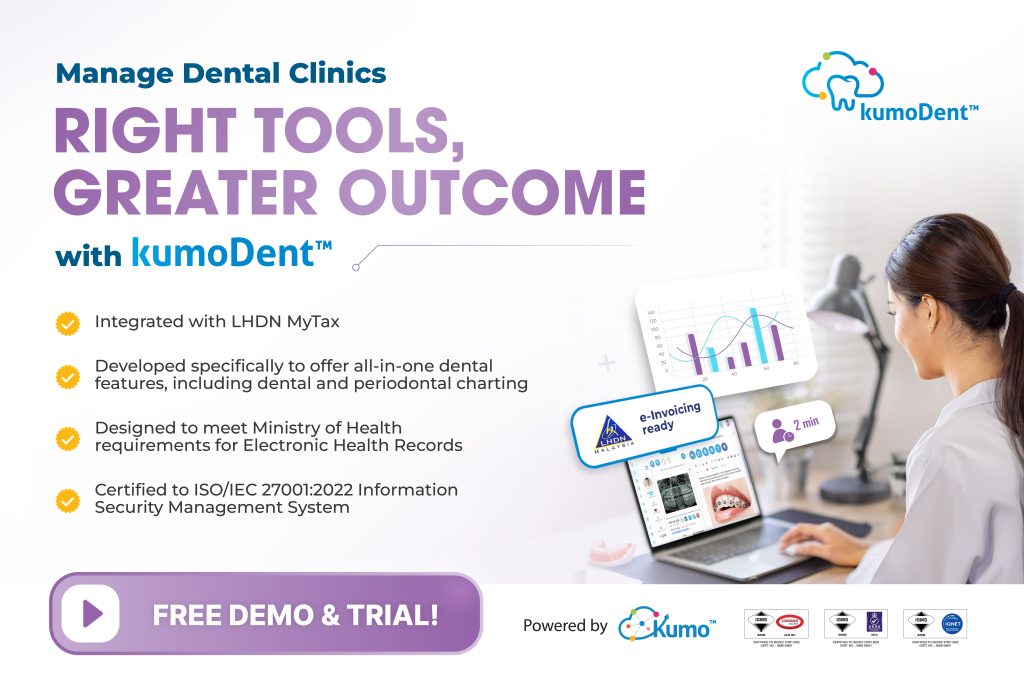
Over 2,500 clinics and wellness businesses already run on kumoDent™, turning daily numbers into clearer decisions. Whether you operate a single practice or a growing network, here’s what you get:
Try kumoDent™ with a FREE demo and FREE trial, and see what your clinic’s numbers have been trying to tell you all along.





 English
 B. Malaysia
 Chinese
 B. Indonesia
 Thai
Thai